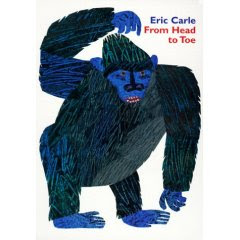
I'm not sure if I'll do a Thanksgiving lesson this year or not, but I've started looking for good children's books as a starting point for next year. After years in the elementary school I've learned to get better at selecting appropriate children's books -- there are some that are interesting but the language is just too complex, and there are other ones with appropriate language but the pictures and overall storyline are terrible -- so I thought I'd put together a list of potential ones I'm thinking about buying for the future. I do have to say, though, that I don't mind buying kids' books on Thanksgiving because I intend to keep the tradition alive for my own little one(s).
Here in France, I tend to try to find a good blend of a simple book with great illustrations once kids know how to read, and I think I've been successful in incorporating the material into lessons. They're able to start picking out words they know, talking about the pictures, and we're also working on figuring things out through context. Some of the Scholastic non-fiction books I have are just perfect for my young guys, but I'm no longer eligible for Scholastic, unfortunately.
So, here is my potential list of what I think are candidates for a good intro book on Thanksgiving for young learners. I only have seen a couple of pages, so I could be easily disappointed. I worry that the board book format will be seen as a little babyish for some, but no one has ever complained (yet). If you know anything about any of these books, please feel to let me know how you think they would do as an EFL-friendly intro to Turkey Day.
This First Thanksgiving Day by Laura Krauss Melmed
Thanksgiving Is for Giving Thanks by Margaret Sutherland
Spot's Thanksgiving by Eric Hill
My First Thanksgiving by Tomie dePaola
One Little, Two Little, Three Little Pilgrims by B.G. Hennessy
Saturday, November 04, 2006

Catching Up
Thanks to both of you who left helpful comments about finding the guidelines! It's nice feeling like I will be able to get a handle on what I'm doing.
This blog has fallen by the wayside with all the other events happening in my life, but I'd like to resurrect it and try to keep it going. I find myself struggling with job insecurity and lack of structure in the environment and wonder if I will be able to continue working like this for the rest of my life, or if it's time to find another career. At times I feel like I'm just not doing a very good job, or at least the job I would like to do, although sometimes the reasons for that are beyond my control. My adult students are nice, but not always motivated and I find sometimes that their expectations of what teachers are supposed to do just don't meet my teaching style. As in, some of them want someone completely grammar-focused with lots of worksheets and I don't get the idea they believe that a mix of some grammar combined with communicative-based activities will lead to progress. I've been told I need to "stick with the book and hit grammar hard" with my new batch of classes, but while some students are okay with this, others are not. I really feel like I am damned if I do, damned if I don't, not to mention the fact that I'm not a "stick with the book and pound away at grammar" kind of teacher. How to please all of the students and thus the bosses? Not an easy path to trod. Business courses are okay but I'm not passionate about teaching presentation/meeting skills for the billionth time, and I just don't have enough real courses with the young ones. On the other hand, I'm grateful I am employed, so I guess I shouldn't complain too much.
When things die down, I'll post more and ask a few specific questions I've been thinking about. For now, I'd just like to know any nice things people have done for Halloween with young learners. The Toussaint holiday comes at a time that more or less makes lessons on Halloween too early or too late, so we decided to have our 'celebration' after the fact. I thought it might be nice to have something fun to come back to, but I'll let you know if that was a wise decision. I found some nice activities at FamilyFun.com that I'd like to try, although I did need to ask my mom to bring a few supplies with her when she visited.
Today I bought a copy of Meg and Mog that I'd like to use to get some good language going (I'm still working on getting those kids to understand English can be used to talk about things and is more than knowing the word for the flashcard), so if anyone has used that successfully, I'd like to know. I do know that I have too many things planned for this one class, so I'll have to rank things in order of importance. I definitely want to work in the target language (easy stuff like parts of the face/body and simple "It's/They're" sentences), so some of the craft stuff will probably have to be really quick and easy. I'm tickled to add in a little bit of culture but want to make sure there's still a language focus and not just a random craft, no matter how cute it is, that has nothing to do with what we're trying to accomplish.
I've also made up a quick mini-play that I am determined to get one class involved in...I think they are ready but it's a new step for them and my biggest challenge is to get them using English in addition to playing around with the props. Last week I wanted them to act out the story in our English Adventure unit...they enjoyed the story, they enjoyed playing with the parts of Mr. Potato Head, but I waited until the end of class and they were too scattered to really be able to do the language functions that I know they can perform. One of my gems was busy trying to stick things up his nose, so that was a distraction that I did not predict. Next time I will know and be prepared. Sheesh. On a positive note, I do see kids making progress and I'm pretty tickled with that. If only I could do this all day! I love having reasonably-sized classes and good materials, which is what is keeping me from trying to do this in an actual school. I have heard so many local horror stories from the assistants that I'm pretty put off on trying to work for the public schools.
This blog has fallen by the wayside with all the other events happening in my life, but I'd like to resurrect it and try to keep it going. I find myself struggling with job insecurity and lack of structure in the environment and wonder if I will be able to continue working like this for the rest of my life, or if it's time to find another career. At times I feel like I'm just not doing a very good job, or at least the job I would like to do, although sometimes the reasons for that are beyond my control. My adult students are nice, but not always motivated and I find sometimes that their expectations of what teachers are supposed to do just don't meet my teaching style. As in, some of them want someone completely grammar-focused with lots of worksheets and I don't get the idea they believe that a mix of some grammar combined with communicative-based activities will lead to progress. I've been told I need to "stick with the book and hit grammar hard" with my new batch of classes, but while some students are okay with this, others are not. I really feel like I am damned if I do, damned if I don't, not to mention the fact that I'm not a "stick with the book and pound away at grammar" kind of teacher. How to please all of the students and thus the bosses? Not an easy path to trod. Business courses are okay but I'm not passionate about teaching presentation/meeting skills for the billionth time, and I just don't have enough real courses with the young ones. On the other hand, I'm grateful I am employed, so I guess I shouldn't complain too much.
When things die down, I'll post more and ask a few specific questions I've been thinking about. For now, I'd just like to know any nice things people have done for Halloween with young learners. The Toussaint holiday comes at a time that more or less makes lessons on Halloween too early or too late, so we decided to have our 'celebration' after the fact. I thought it might be nice to have something fun to come back to, but I'll let you know if that was a wise decision. I found some nice activities at FamilyFun.com that I'd like to try, although I did need to ask my mom to bring a few supplies with her when she visited.
Today I bought a copy of Meg and Mog that I'd like to use to get some good language going (I'm still working on getting those kids to understand English can be used to talk about things and is more than knowing the word for the flashcard), so if anyone has used that successfully, I'd like to know. I do know that I have too many things planned for this one class, so I'll have to rank things in order of importance. I definitely want to work in the target language (easy stuff like parts of the face/body and simple "It's/They're" sentences), so some of the craft stuff will probably have to be really quick and easy. I'm tickled to add in a little bit of culture but want to make sure there's still a language focus and not just a random craft, no matter how cute it is, that has nothing to do with what we're trying to accomplish.
I've also made up a quick mini-play that I am determined to get one class involved in...I think they are ready but it's a new step for them and my biggest challenge is to get them using English in addition to playing around with the props. Last week I wanted them to act out the story in our English Adventure unit...they enjoyed the story, they enjoyed playing with the parts of Mr. Potato Head, but I waited until the end of class and they were too scattered to really be able to do the language functions that I know they can perform. One of my gems was busy trying to stick things up his nose, so that was a distraction that I did not predict. Next time I will know and be prepared. Sheesh. On a positive note, I do see kids making progress and I'm pretty tickled with that. If only I could do this all day! I love having reasonably-sized classes and good materials, which is what is keeping me from trying to do this in an actual school. I have heard so many local horror stories from the assistants that I'm pretty put off on trying to work for the public schools.
Tuesday, September 12, 2006
Curriculum Question
Slowly but surely I am getting more and more hours to work. Right now a lot of them are temporary customers (meaning they only purchased between 10-20 hours of lessons) but I am hopeful that the year-long classes will start before too long. Things are really up in the air at the moment...I still don't have a contract and am supposed to start classes next week (but don't have any of them confirmed so I can't plan). This, too, shall pass.
Anyway, I am seeking any kind of formal curriculum guide that the state has for each year of English in public schools. At my workplace I was told to look at the samples of textbooks that they had on the shelf and figure it out myself, but I really do want to be able to look at the official version that the teachers (should) have. I would like to think that there is an easy-access website connected to the French department of education, but somehow I have a hunch that it won't be so clear-cut. But just in case there is, and one of you reading my blog has found it, could you please point me in that direction?
I want the basic guidelines of what students are exposed to and which language skills/vocabulary/grammar points they are expected to have mastered in each year. I'm too A.R. to be comfortable with "Oh, I think they do the present perfect this year" or "Just look at the textbook." I want to know exactly what the plan is, even if I'm not in charge of delivering it all, and I want more details than the grammar points. Plus, I don't know about you, but a few of those textbooks give me chills.
Also, does anyone know if the education nationale tends to follow the European Framework in reference to language education? Are those official guidelines or just suggestions? Last year I did try to go with the flow for the most part, but now I'm really ready to figure out how the system works and how I can get it more or less in sync with what I know is effective for kids.
Thanks for any help you can provide! I'll pass on anything I find out as well.
Anyway, I am seeking any kind of formal curriculum guide that the state has for each year of English in public schools. At my workplace I was told to look at the samples of textbooks that they had on the shelf and figure it out myself, but I really do want to be able to look at the official version that the teachers (should) have. I would like to think that there is an easy-access website connected to the French department of education, but somehow I have a hunch that it won't be so clear-cut. But just in case there is, and one of you reading my blog has found it, could you please point me in that direction?
I want the basic guidelines of what students are exposed to and which language skills/vocabulary/grammar points they are expected to have mastered in each year. I'm too A.R. to be comfortable with "Oh, I think they do the present perfect this year" or "Just look at the textbook." I want to know exactly what the plan is, even if I'm not in charge of delivering it all, and I want more details than the grammar points. Plus, I don't know about you, but a few of those textbooks give me chills.
Also, does anyone know if the education nationale tends to follow the European Framework in reference to language education? Are those official guidelines or just suggestions? Last year I did try to go with the flow for the most part, but now I'm really ready to figure out how the system works and how I can get it more or less in sync with what I know is effective for kids.
Thanks for any help you can provide! I'll pass on anything I find out as well.
Monday, August 28, 2006
Truth or Bluff
So, I did the Summer Vacation -- oh, excuse me, I mean Holiday -- Truth or Bluff activity today with the 4eme. It came from Onestopenglish.com, which has some good material for a free internet resource and is decently organized. It's my new favorite. Has anyone signed up for a paid subscription? I wonder if it's worth asking my bosses to join.
As a warmer, it worked pretty well and I got a very good idea of their levels. I accidentally called on one of the weaker kids first -- that's the rub with a new class -- who predictably read his card, thereby defeating the purpose of the activity. I pushed him a bit, anyway, but in a joking manner so that he got enough off-the-cuff speaking time. Since he was first, I gave him a little slack but forewarned the others that if they read instead of bluffing, they would get "yet more practice." The other weaker student immediately gave it away when it was his turn, but I gave him another card, some time to think, and the second time he did brilliantly. The rest of the bluffers did an excellent job of pretending they went to Australia to visit family or on wild water adventure trips in Canada, etc. At the end when I asked them to list activities that were useful, I think most of them listed Truth or Bluff.
Another activity they found both useful and enjoyable was a version of Question Tic-Tac-Toe. I wasn't initially thrilled about it (the lessons are mostly planned and the teachers select among suggested activities) but I liked it better than some of the other suggestions. It involves a grid of 20 squares with different question starters written in them...things such as 'Why did...," How many..., " and "Who were..." Students had to get 3 squares in a row by choosing a number and asking another group a grammatically correct question using the starter. It was harder than it sounds and gave them a good review of verb tenses before school starts back up. The true goal, I believe, was to aim for trivia questions but I ended up taking it down a notch and just focusing on the basics of how to form questions. Another team had to answer the question correctly or they lost a turn, so that team also got a good review of how to make sure the tenses matched between the question and answer.
I was surprised at how long they wanted to continue playing and also at how most of them listed it as really useful. I don't see this as being a good activity for a large group, though, because they got a lot of feedback and hints from me as they were making their questions (if they didn't have any guidance it would have been a total waste of time). They actually spoke a mix of French/English so I could understand what they were trying to say and then guide them in making the questions they wanted versus the questions they were 'forced' into based on the starters. Another surprise was that the other groups were paying attention to the group trying to formulate their question in order to get tips and then be able to "steal" the square later. Huh. Who knew?
You know, though, I do feel a lot of sympathy with the classroom teachers who have groups of 30 students. It's so difficult to set up successful groupwork and be able to adequately monitor all the students. It's a situation that just sets itself up for question & answer / grammar worksheets. I'd love to hear from people who are successful at setting up effective small-group activities in large classes.
As a warmer, it worked pretty well and I got a very good idea of their levels. I accidentally called on one of the weaker kids first -- that's the rub with a new class -- who predictably read his card, thereby defeating the purpose of the activity. I pushed him a bit, anyway, but in a joking manner so that he got enough off-the-cuff speaking time. Since he was first, I gave him a little slack but forewarned the others that if they read instead of bluffing, they would get "yet more practice." The other weaker student immediately gave it away when it was his turn, but I gave him another card, some time to think, and the second time he did brilliantly. The rest of the bluffers did an excellent job of pretending they went to Australia to visit family or on wild water adventure trips in Canada, etc. At the end when I asked them to list activities that were useful, I think most of them listed Truth or Bluff.
Another activity they found both useful and enjoyable was a version of Question Tic-Tac-Toe. I wasn't initially thrilled about it (the lessons are mostly planned and the teachers select among suggested activities) but I liked it better than some of the other suggestions. It involves a grid of 20 squares with different question starters written in them...things such as 'Why did...," How many..., " and "Who were..." Students had to get 3 squares in a row by choosing a number and asking another group a grammatically correct question using the starter. It was harder than it sounds and gave them a good review of verb tenses before school starts back up. The true goal, I believe, was to aim for trivia questions but I ended up taking it down a notch and just focusing on the basics of how to form questions. Another team had to answer the question correctly or they lost a turn, so that team also got a good review of how to make sure the tenses matched between the question and answer.
I was surprised at how long they wanted to continue playing and also at how most of them listed it as really useful. I don't see this as being a good activity for a large group, though, because they got a lot of feedback and hints from me as they were making their questions (if they didn't have any guidance it would have been a total waste of time). They actually spoke a mix of French/English so I could understand what they were trying to say and then guide them in making the questions they wanted versus the questions they were 'forced' into based on the starters. Another surprise was that the other groups were paying attention to the group trying to formulate their question in order to get tips and then be able to "steal" the square later. Huh. Who knew?
You know, though, I do feel a lot of sympathy with the classroom teachers who have groups of 30 students. It's so difficult to set up successful groupwork and be able to adequately monitor all the students. It's a situation that just sets itself up for question & answer / grammar worksheets. I'd love to hear from people who are successful at setting up effective small-group activities in large classes.
Thursday, August 24, 2006
End of Vacation Blues
I've been out of teacher mode for a while, but am gearing up for it next week's English camp. I'm not trying any TPR-storytelling this time because I'm not yet sure how to adapt it to a more advanced level in such a compressed time period, so nothing too terribly new and innovative this time. Just pushing English as a useful tool and trying to find meaningful, contextual activities that aren't too easy or difficult. Oh, and I will also be doing my best to make them understand that enjoyable activities can in fact improve their English. I've read in other forums that other people have the same difficulty with the more communicative techniques...well, mainly with older students, I think. Sometimes it seems like they have their expectations beaten into them and activities that don't fit the mold are seen as a little frivolous. The ones at the camp aren't quite there (yet) so maybe I can make a little headway. They are just so used to looking at success in terms of test scores, so I can hardly blame them. That's how it is.
IThere aren't any first day warm-ups listed in the lesson plans I was given, so I'm thinking about which ones I want to use. Any suggestions? I'll write about the one(s) I chose and how they went next week. I found a version of "Truth or Lie" centered around holidays, so that might be a fun and easy way to start things off. Oh, and I'm also looking for any kind of off-beat role plays that are floating around out there. For the last camp I wrote up a complicated "love pentagon" that went over well since they were right in the throes of the whole teenage couple thing. I wouldn't use it with every group, so I'm not sure if I'll dig it out this time or not.
Somewhat off topic, there seem to be several other expats around who are also frustrated with finding steady employment here. I'm not sure in which direction I'll go, but I am sure that I am not going to be able to handle successive 10-month contracts without any minimum hours. Heck, sometimes I feel like I need a support group just to get through the next month and a half of "maybe I'll have work, maybe I won't." Hang in there, everybody. Someday it's bound to get better. I'd love to know about people who have started their own language schools, but I imagine it's a total mess of red tape.
IThere aren't any first day warm-ups listed in the lesson plans I was given, so I'm thinking about which ones I want to use. Any suggestions? I'll write about the one(s) I chose and how they went next week. I found a version of "Truth or Lie" centered around holidays, so that might be a fun and easy way to start things off. Oh, and I'm also looking for any kind of off-beat role plays that are floating around out there. For the last camp I wrote up a complicated "love pentagon" that went over well since they were right in the throes of the whole teenage couple thing. I wouldn't use it with every group, so I'm not sure if I'll dig it out this time or not.
Somewhat off topic, there seem to be several other expats around who are also frustrated with finding steady employment here. I'm not sure in which direction I'll go, but I am sure that I am not going to be able to handle successive 10-month contracts without any minimum hours. Heck, sometimes I feel like I need a support group just to get through the next month and a half of "maybe I'll have work, maybe I won't." Hang in there, everybody. Someday it's bound to get better. I'd love to know about people who have started their own language schools, but I imagine it's a total mess of red tape.
Subscribe to:
Posts (Atom)